
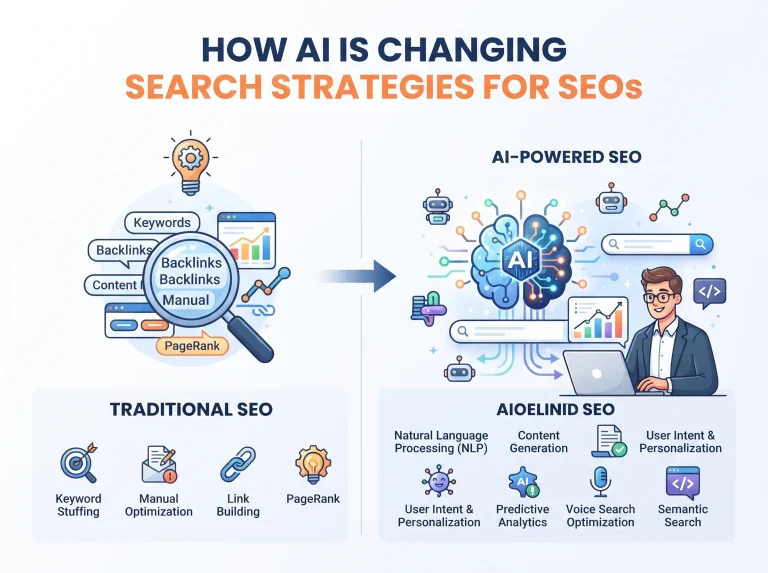
Quick Answer: AI is changing the rules of search, no longer just ranking by keywords but answering what the user is looking for more directly. A lot of SEOs and marketers are still using traditional methods, but the winning teams are optimizing for AI overviews, conversational queries and source citations, backed by strong technical SEO and quality content.
Search strategies have shifted as artificial intelligence reshapes how people find information online. Many marketers and SEOs now ask a key question: how has your search strategy changed due to AI? Recent feedback from professionals shows a mixed picture. Only 12% say their approach has significantly evolved, while 53% report no real change. Another 32% remain unsure, and just 3% note some adjustments. These numbers highlight that while AI tools are widely available, full adoption in organic brand visibility efforts is still uneven.
This guide examines practical ways AI influences keyword research, content creation, technical SEO, and measurement. It also covers steps teams can take to stay competitive without overhauling everything at once. Whether you manage campaigns for local businesses or larger brands, the focus remains on clear, actionable updates that improve results.
Understanding the Current State of AI in Search
AI-powered features now appear across major search engines and answer tools. Google AI Overviews, ChatGPT responses, and platforms like Perplexity summarize information and surface sources in new formats. Users often receive direct answers instead of traditional lists of links. This changes how visibility is earned.
Many teams still rely on established methods such as ranking for specific keywords and building backlinks. The poll data shows that over half of marketers and SEOs have not made major updates. This creates an opportunity. Those who carefully test AI tools while maintaining core SEO practices can gain an edge in organic brand visibility.
Experience from ongoing campaigns shows that AI does not replace foundational work. It adds layers. Accurate data, clear site structure, and helpful content remain essential. AI simply changes how users discover and interact with that content.
Key Ways AI Is Influencing Search Behavior
People now phrase queries differently. Conversational and longer questions appear more often because AI tools handle natural language well. Instead of typing short phrases, users ask full questions and expect summarized answers with citations.
Zero-click searches have increased in some categories. When an AI overview satisfies the need, fewer people click through to websites. This affects traffic patterns for informational queries. Brands that provide clear, structured answers still earn visibility through featured sources and citations.
Local and commercial intent queries continue to drive clicks. Product comparisons, service details, and location-based searches often lead users to specific sites. AI summaries rarely replace the need to visit a business page or review options in depth.
Teams focused on organic brand visibility benefit from monitoring these shifts. Track which queries produce AI-generated answers and which still send traffic. Adjust content priorities accordingly.
Impact on Different Query Types
- Informational queries: Higher chance of AI summaries
- Navigational queries: Users still seek specific brands or pages
- Transactional queries: Detailed product or service pages remain important
- Local queries: Map packs and business profiles continue to perform
Updating Keyword Research with AI Insights
Traditional keyword tools still provide volume and competition data. AI adds value by revealing related questions, intent patterns, and emerging topics. Use AI to expand seed keywords into clusters that match how people actually ask for information.
Start with your primary topics. Feed them into AI tools to generate related phrases and long-tail variations. Then validate those suggestions with search volume tools and actual search results. This combination keeps research grounded in real demand.
Focus on topics that support organic brand visibility. Look for opportunities where your site can serve as a cited source in AI answers. Clear definitions, step-by-step explanations, and original data points increase the chance of inclusion.
Secondary keywords such as AI SEO tools, search intent analysis, content optimization strategies, organic visibility metrics, and AI-powered keyword research fit naturally into this process. Use them where they match user needs rather than forcing them into every section.
Content Creation and Optimization Adjustments
AI writing tools can speed up drafts and outline generation. The best results come when human editors refine the output for accuracy, brand voice, and practical value. Purely AI-generated text often lacks depth and specific examples that build trust.
Structure content for both traditional rankings and AI extraction. Use clear headings, short paragraphs, and direct answers near the top of sections. Include lists and tables where they help readers scan information quickly.
Original insights matter more than ever. Share process details, common challenges, and tested approaches. These elements help content stand out when AI systems select sources for summaries.
Update existing pages with fresh examples and clearer explanations. Refreshing high-performing content often yields faster gains than creating entirely new pieces. Monitor performance after updates to confirm improvements in both rankings and engagement.
Practical Content Tips
- Lead sections with concise answers to likely questions
- Add unique observations from your work with clients or campaigns
- Use bullet points for steps and key takeaways
- Keep paragraphs short for easy reading on any device
- Include internal links to related tools and resources on your site
Technical SEO and Site Performance Considerations
AI systems still rely on crawlable, well-structured sites. Clean HTML, proper heading hierarchy, and fast loading times support both traditional crawlers and AI indexing processes. Schema markup helps clarify content type and relationships.
Mobile performance remains critical. Many AI interactions happen on mobile devices. Test pages for speed and usability across common screen sizes. Fix issues that slow rendering or hide important content.
Security headers and basic site health checks protect user trust. Tools that verify contrast, generate QR codes, convert images, or handle PDF tasks can support content workflows. Keeping these supporting tools available helps teams work efficiently.
Regular audits catch problems early. Check for broken links, missing alt text, and outdated information. These basics continue to influence how search systems evaluate pages.
Measuring Success in an AI-Influenced Landscape
Traditional metrics such as rankings, organic traffic, and conversion rates still matter. Add new signals where possible. Track brand mentions in AI responses when tools allow it. Monitor which pages receive citations or appear in overview sources.
Look at engagement data closely. Time on page, scroll depth, and return visits indicate whether content satisfies users after they arrive from either traditional results or AI summaries. High bounce rates on informational pages may signal that AI already answered the basic question.
Set realistic goals. Not every page needs to rank number one. Some content succeeds by becoming a reliable source that AI systems reference. Others drive direct conversions through clear calls to action.
Share findings across marketing and SEO teams. Alignment on organic brand visibility improves when everyone understands the same performance data and priorities.
Common Mistakes to Avoid
Relying only on AI-generated content without review leads to generic pages that fail to build authority. Always fact-check and add original perspective.
Ignoring traditional SEO fundamentals while chasing AI trends creates gaps. Fast pages, clear structure, and quality backlinks remain important.
Focusing exclusively on short-term traffic spikes can distract from long-term brand visibility. Balance quick wins with consistent content that supports core topics.
Failing to test changes is another frequent issue. Introduce AI tools gradually and measure impact before expanding use across the full strategy.
Overlooking team alignment reduces effectiveness. When marketers and SEOs share the same view of organic goals, execution improves.
Practical Steps to Evolve Your Strategy
Begin with an audit of current search performance. Identify pages that already attract traffic and those that address questions AI tools commonly summarize.
Select two or three AI tools for keyword expansion and content outlining. Limit initial use so the team can evaluate quality and time savings.
Update your content guidelines. Specify how AI drafts should be reviewed, what original elements must be added, and how to structure answers for both users and AI systems.
Improve internal linking. Connect related articles and tool pages so users and search systems can move easily between resources. Pages covering image conversion, contrast checking, security headers, thumbnail downloads, QR code generation, and PDF tools offer natural linking opportunities for practical content.
Review external partnerships and references carefully. Quality matters more than volume when building trust signals.
Schedule regular reviews of AI search features. Test how your key pages appear in AI overviews and adjust wording or structure when useful.
Document what works. Share successful approaches with the wider team so knowledge compounds over time.
FAQ
Has AI completely replaced traditional SEO?
No. AI changes how some information is presented, but ranking factors such as relevance, quality, and technical health still determine visibility in both traditional results and AI summaries.
Should every piece of content be optimized for AI overviews?
Focus first on topics where users seek quick answers. Transactional and highly specific pages often perform better with standard optimization and clear conversion paths.
How often should search strategies be reviewed for AI changes?
Quarterly reviews work well for most teams. More frequent checks help during major search engine updates or when new AI features launch.
Can small teams compete with larger ones that use advanced AI tools?
Yes. Careful use of free or affordable tools combined with strong fundamentals often outperforms rushed adoption of complex systems. Consistency and clarity matter more than tool volume.
What role do backlinks play when AI summarizes content?
Backlinks continue to signal authority. Pages that earn quality links are more likely to be selected as sources in AI-generated answers.
How can teams stay aligned on organic brand visibility goals?
Share regular reports that include both traditional metrics and observations about AI appearances. Joint planning sessions keep priorities consistent across marketing and SEO roles.
Next Steps for Your Team
Review the poll data against your own experience. If your search strategy has seen little change so far, start with one focused update this month. Improve keyword research processes or refresh a high-value content cluster with clearer answers and better structure.
Test how your key pages appear in AI tools. Note any gaps and address them with practical improvements. Use available site tools for supporting tasks such as image handling, accessibility checks, and document preparation to keep workflows efficient.
Track results over the next 60 to 90 days. Adjust based on what the data shows rather than assumptions. Consistent, measured steps produce stronger organic brand visibility than sudden large changes.
Explore related resources on practical SEO tools and techniques. Applying clear processes today positions your brand for better results as search continues to evolve.